

While Germany repeats “Never Again,” Gaza hears only echoes. On April 13–14, 2025, Berlin became a battleground—not of tanks, but of truths. The Palestine Congress attempted to hold a Gaza Tribunal confronting German complicity in Israel’s war on Gaza. The German state responded not with counterarguments but with police batons and bans. Yet the people persisted. They livestreamed testimonies. They raised their voices where silence was imposed.
The tribunal didn’t aim to replace formal justice. It aimed to remind Germany of its moral and legal obligations. Lawyers, scholars, doctors, and survivors gathered—some online, some silenced at the border. Among them was Dr. Ghassan Abu Sitta, a Glasgow-based Palestinian-British surgeon, denied entry. His absence was loud. But the stories he could’ve told echoed through others.

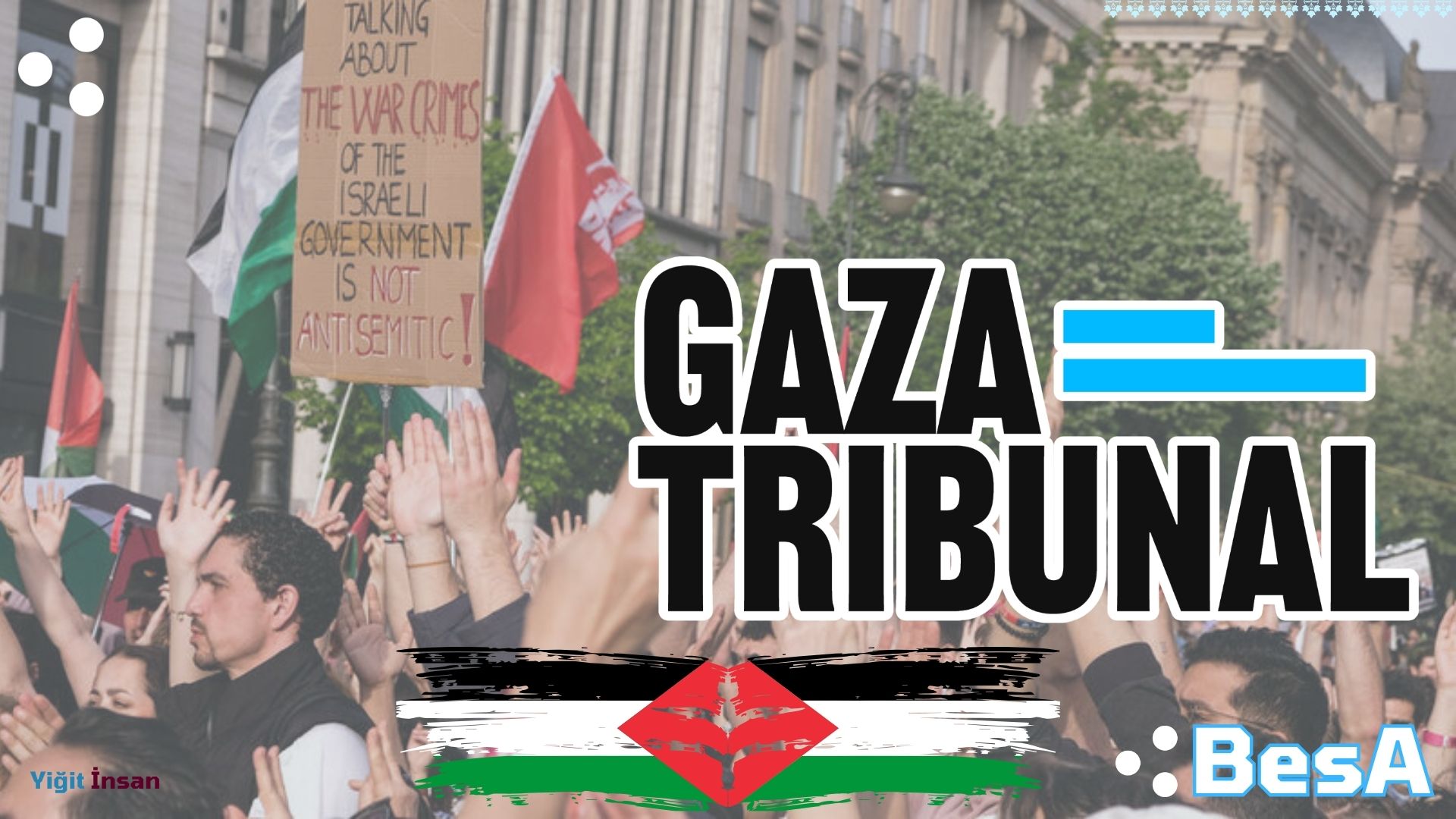
Germany’s Role: Not Passive, but Participating
The first session dissected the Federal Republic’s military and political backing of Israel. German weapons, even those claimed as “training ammunition,” were reportedly used in the bombing of Gaza. Attorney Nadija Samour rejected Berlin’s legal evasions as hollow. She argued Germany holds not just a moral but legal responsibility under the Genocide Convention to prevent—not merely punish—atrocities.
International legal scholar Noura Erakat challenged Germany’s defense before the International Court of Justice. The issue is not semantics—whether genocide is legally proven—but the sheer scale of civilian death, especially of children. Erakat called out the “racist calculus” in how states remained mute through Palestinian suffering but erupted only after international aid workers were killed.

Eyewitnesses of Horror: Inside the Gaza Tribunal German Session
The Gaza Tribunal German session revealed something formal hearings never do: unfiltered truth. When institutions fail, people speak. And when they do, truth doesn’t come wrapped in diplomatic phrasing—it comes raw, urgent, and undeniably human. Two key witnesses in Berlin, both with direct ties to Gaza, offered more than testimony. They delivered memory.
Medical student Jamila Hamadaqa reminded the Gaza Tribunal German assembly that 50% of Gaza’s population are children. Their suffering, she said, isn’t just a consequence—it’s a target. Every night under bombardment steals more than sleep. It steals imagination, trust, and a future. Her voice was steady, but her words trembled through the silence. She didn’t seek pity. She demanded recognition.
Then came Dr. Abdallah Abdelhadi—a pediatrician who returned to Gaza after living in Germany. His testimony was not detached analysis. It was lived grief. At the Gaza Tribunal German hearing, he stated clearly: “October 7 wasn’t the beginning. It was the breaking point.” According to him, every attempt at peaceful resistance by Palestinians had been met with brutal repression. Not sometimes. Every time.
Crucially, both witnesses framed their pain in ethical terms. They weren’t just recounting suffering—they were exposing complicity. And that’s where the Gaza Tribunal German makes a decisive impact: it confronts power with presence. In a world where bureaucracies delay and governments deflect, these stories become a legal archive and a moral compass.
This was not merely a session. It was a rupture in silence. A reminder that justice, when it forgets to listen, becomes another form of erasure. But here, within the Gaza Tribunal German gathering, people remembered. They recorded. And in doing so, they reclaimed something courts had lost: human truth.
Resolution: A Civic Verdict in the Gaza Tribunal German Session
The Gaza Tribunal German session did not end with silence—it ended with a collective voice. After hours of testimony, the people spoke. And when they spoke, they made it legal.
This was not a symbolic ending. It was a demand. A list of obligations, not suggestions. The tribunal’s resolution called for immediate, actionable change. It named names and rejected delay.

A Ceasefire Demanded, Not Requested
The first demand was simple and direct: an immediate and unconditional ceasefire in Gaza. The Gaza Tribunal Germanemphasized that delay only deepens atrocity. Waiting is no longer neutral. Peace can’t wait for permission. Ceasefire is not diplomacy—it’s survival. And survival cannot be negotiated.
Reparations for the People, Not the Politics
Second, the tribunal demanded reparations. Not to governments—but to the Palestinian people themselves. The Gaza Tribunal German panel insisted reparations must match the harm. Symbolism is not enough. This demand wasn’t abstract. It was grounded in loss: homes, lives, futures, dignity. And memory.
Germany Must End All Forms of Support to Israel
Next, the resolution targeted German complicity. It called for ending military, economic, and diplomatic support. The Gaza Tribunal German found no justification for neutrality. Silence is support. So is trade. The message was direct: no more aid to oppression. No more excuses masked as “policy.”
Settler Colonialism Named, Not Avoided
Importantly, the tribunal didn’t soften language. It named 76 years of settler colonialism. Ethnic cleansing wasn’t framed as “conflict.” It was addressed clearly and without euphemism. The Gaza Tribunal German reminded all that systems of power depend on erasure. Testimony rewrites that script. Refusing Historical Amnesia: “Never Again” for All A final, chilling reminder closed the session. “Germany has learned nothing from its past,” said one speaker. “Never Again,” they added, must mean for all people—not only for some.
The Gaza Tribunal German declared that selective memory fuels selective justice. And that injustice never forgets.
By Yiğit İnsan: A Final Word on the Gaza Tribunal German
The Gaza Tribunal German didn’t just speak truth to power—it reclaimed truth from silence. What we witnessed was not a courtroom formality, nor a spectacle of rage. It was dignity, structured. It was memory, given voice, it was law, reminded of its soul.
We often forget that behind every article of international law lies a human face. And sometimes, that face belongs to a child who no longer dreams. Or to a doctor who can no longer save. The Gaza Tribunal German made sure we didn’t look away. It turned every ignored body, every shattered home, every silenced witness—into testimony that speaks back.
In a world where states weaponize memory and redact justice, this Tribunal asked no one for permission. It listened, it recorded, it remembered out loud. And in doing so, it didn’t just accuse—it revealed. Germany’s silence was not neutral. It was participation. But that silence met its match in the words of survivors, scholars, and citizens who refused to unsee.
So what now? That depends on us. On what we carry forward. On whether we scroll past, or stand with. The Gaza Tribunal German is not just an archive—it’s a starting point.
Because justice isn’t something we wait for anymore. It’s something we build, name by name, truth by truth.
And when states forget, people remember.
— Yiğit İnsan — BesA
If you ask, I’ll explain. We must learn. And we will—without question.
Web Link , Youtube Link , Instagram Link
This text was written as a public statement and stands as an example of homegrown, nationally developed software. It is not artificial intelligence. It is Native INTELLIGENCE.
Share this content: